Through the Veil
Oct 14, 2026
Through the Veil
By the time I made Through the Veil, I'd already spent much of the night photographing the Milky Way.
But getting to that point had taken a few tries.
This was my third attempt at photographing the night sky. On my previous trips, I'd struggled just to get the stars properly in focus. So when I headed to Payne Lake that night, my expectations were pretty simple.
I wanted sharp stars.
Getting the Milky Way was going to be the cherry on top.
Payne Lake is one of the darker areas I've found near Tuscaloosa, and when I arrived, I discovered the Milky Way was already visible. I'd expected it to rise later, but there it was.
At least, sort of.
To the naked eye, the Milky Way doesn't look anything like the photographs we're accustomed to seeing. Standing beneath it, I could make out what looked like faint gray smudges stretching across the sky.
The camera could see much more.
With the shutter open for around 25 seconds, the sensor collected light my eyes couldn't. Suddenly there were stars everywhere, and the colors and structure of the Milky Way began appearing on the little three-inch screen on the back of my Sony A7 IV.
After two unsuccessful attempts, I was ecstatic.
But something else had been happening in the sky all night.
Clouds.
I'd been watching them since I arrived. They appear in several of the photographs I made that night, including Written in the Stars and When the Stars Aligned. Earlier, they had been thin and wispy as they moved across the sky.
Then they began to converge.
Eventually, they compressed into a narrow band stretching almost perfectly across the bottom of the Milky Way.
That's when I made Through the Veil.
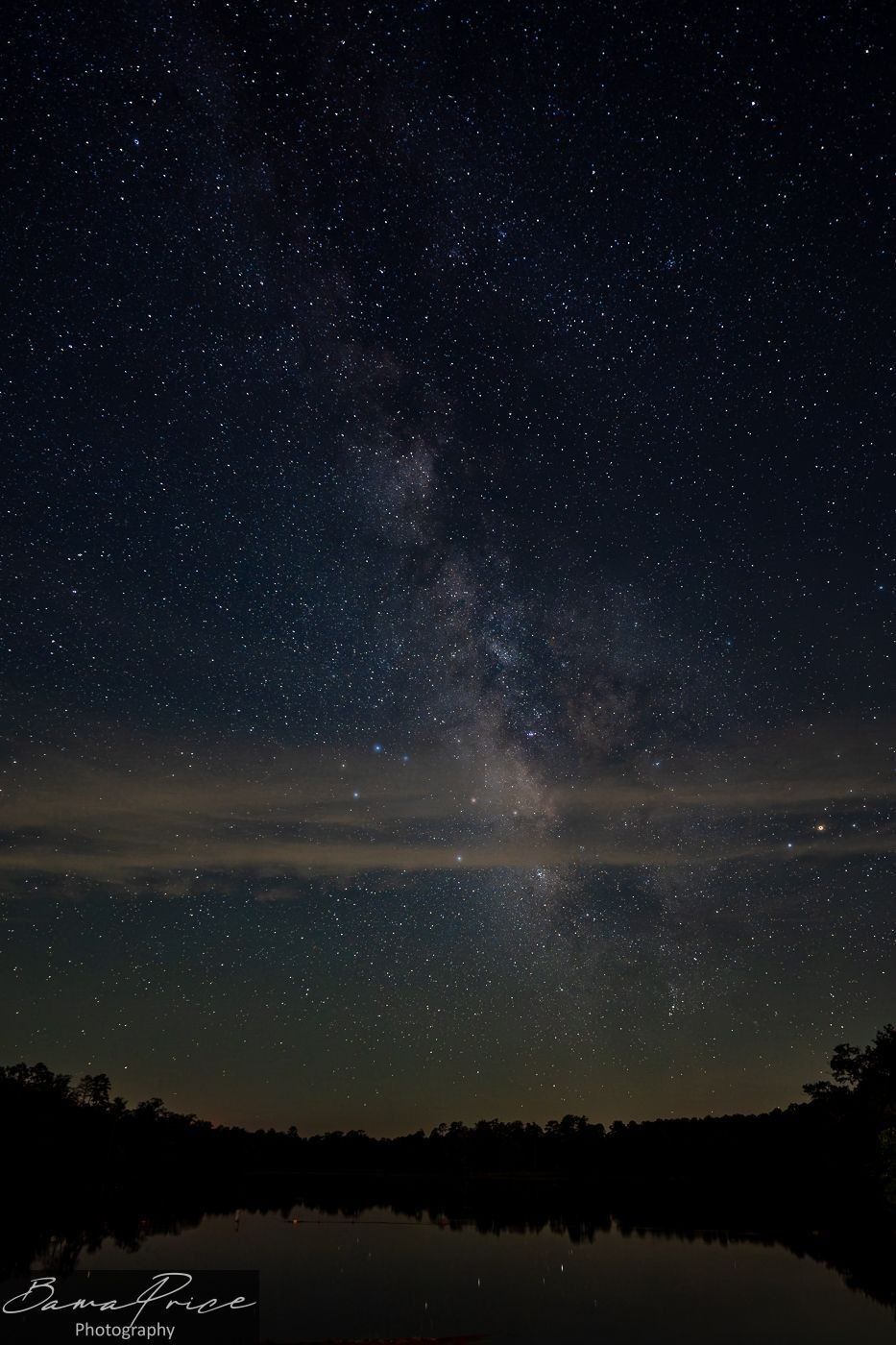
Even looking at the photograph on that little camera screen, I knew there was something special about it.
Today, it's one of my favorite photographs from the entire Night Skies Collection.
I've occasionally wondered whether it would have been better without the clouds.
A completely clear sky would have revealed even more of the Milky Way.
But then I think about what the photograph would have looked like without them.
It would have been another photograph of the Milky Way.
The clouds are what make this moment different.
They're also what was actually there.
That's important to me.
I tell people at art shows that I don't like to over-edit my photographs. I'll make adjustments to bring out what the camera captured, and occasionally I'll remove something distracting like a power line or a person who wandered into the frame.
But I don't want to manufacture a landscape that wasn't there.
Some of my night photographs contain satellite trails. A plane might cross the frame. There was a meteor shower happening that night, so some of the streaks captured in those photographs may even be meteors.
Those things were part of the sky I photographed.
And so were the clouds.
Looking at Through the Veil now, I'm glad I didn't get the perfectly clear sky I might have asked for.
The clouds don't hide the Milky Way.
They give this particular night its identity.
And after two trips where I couldn't even get the stars in focus, standing beneath the Alabama night sky and seeing this photograph appear on the back of my camera was more than enough.
Available as Fine Art
Through the Veil is available in my Night Skies Collection, featuring my fine art photographs of the Milky Way, stars and Alabama's night sky.
You can explore the complete collection at Bama Price Photography.